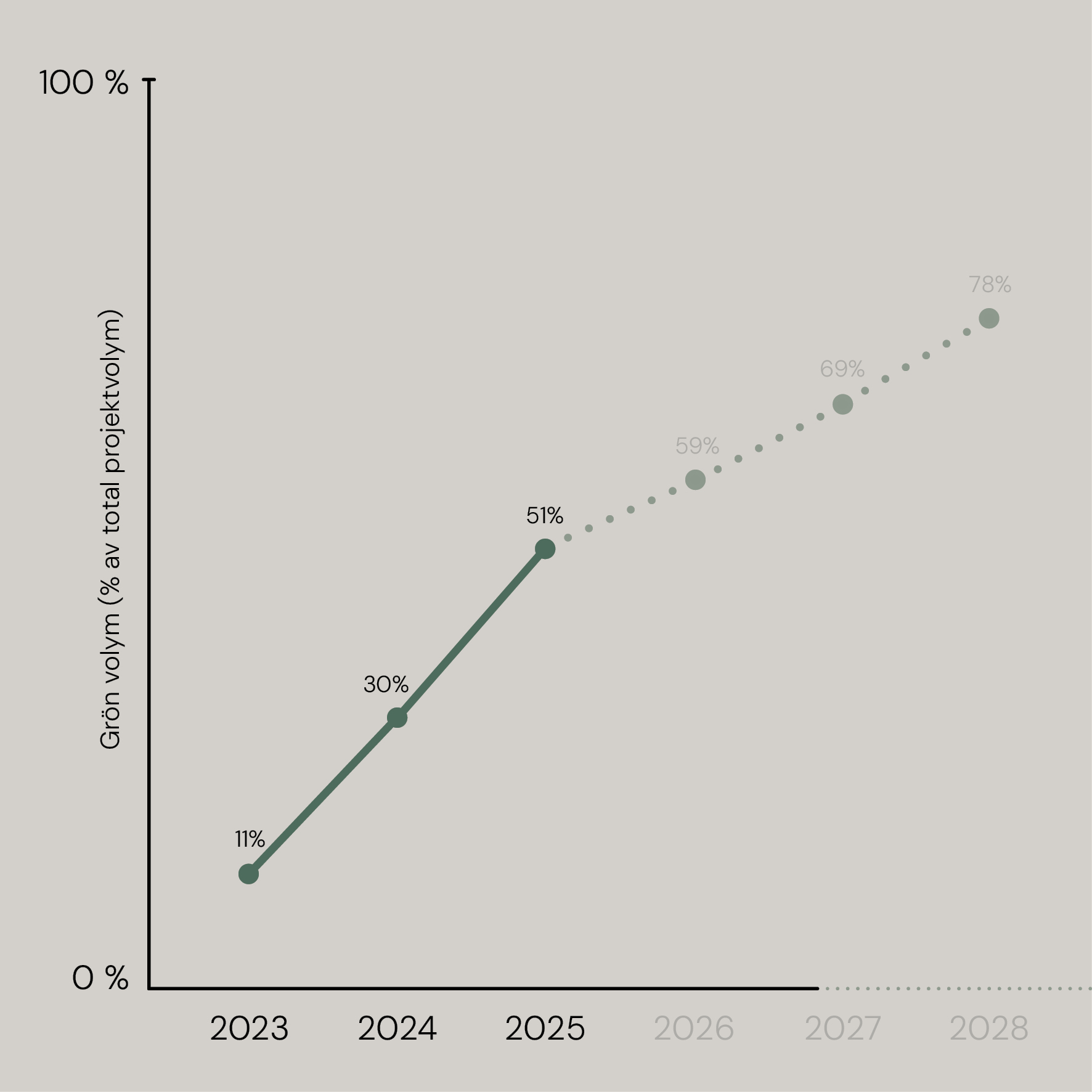
Demand for construction projects with a lower carbon footprint is increasing, and this is clearly reflected in our business. To monitor progress and guide our work, we have defined what we mean by light green and dark green projects.
These definitions allow us to measure progress over time, compare our different markets and set clear targets for continued development.
Since 2023, the proportion of green projects has increased significantly. In just two years, revenue from green projects has grown to account for more than half of the Group’s total project volume in 2025. Against this background, we have set a target to increase the Group’s revenue from light green and dark green projects by an average of 15 per cent annually over the next three years.
Definition of green projects
Light green projects:
• Projects with environmental certification that includes carbon-emissions thresholds.
• Projects that incorporate reused materials as part of their delivery.
Dark green projects:
• Projects with strict carbon-emissions thresholds appropriate to the type of project.
• Projects with a high degree of material reuse.
• Projects with a low-carbon structural frame, such as cross-laminated timber or glulam.
Green projects aligned with our clients’ ambitions and business objectives
Our clients’ carbon-reduction requirements are a business priority. We turn them into projects that work in practice and make financial sense.
A natural part of our business
Green projects now account for more than half of our total project volume. This clearly demonstrates the pace of development and the importance these issues have gained within our business.
– Carbon performance is now an integral part of our business and essential to meeting our clients’ requirements and helping them achieve their goals.
Demand varies between our markets, as requirements and levels of maturity differ between projects and clients. At the same time, we are seeing a clear shift towards greater climate ambitions across the entire Group.
We work closely with our clients from the earliest stages, establishing shared objectives and priorities that lay the foundation for project delivery. Through open dialogue, we can identify solutions that balance carbon reduction, functionality and cost.
Early decisions that create commercially viable projects
The greatest opportunity to make an impact comes during the early stages of a project. By carrying out carbon calculations and evaluating alternative solutions during tendering and design, we can demonstrate the consequences of different choices and provide a stronger basis for decision-making.
– Early decisions are where we can make a real difference, both to the client’s business and to the project’s carbon footprint, now and over time.
In several projects, climate-conscious choices have delivered both environmental and financial benefits. By reusing materials, choosing low-carbon structural solutions and making considered material choices, we can reduce the carbon footprint without compromising quality or deliverability.
– Pär Jorstadius, Group CEO of RO-Gruppen
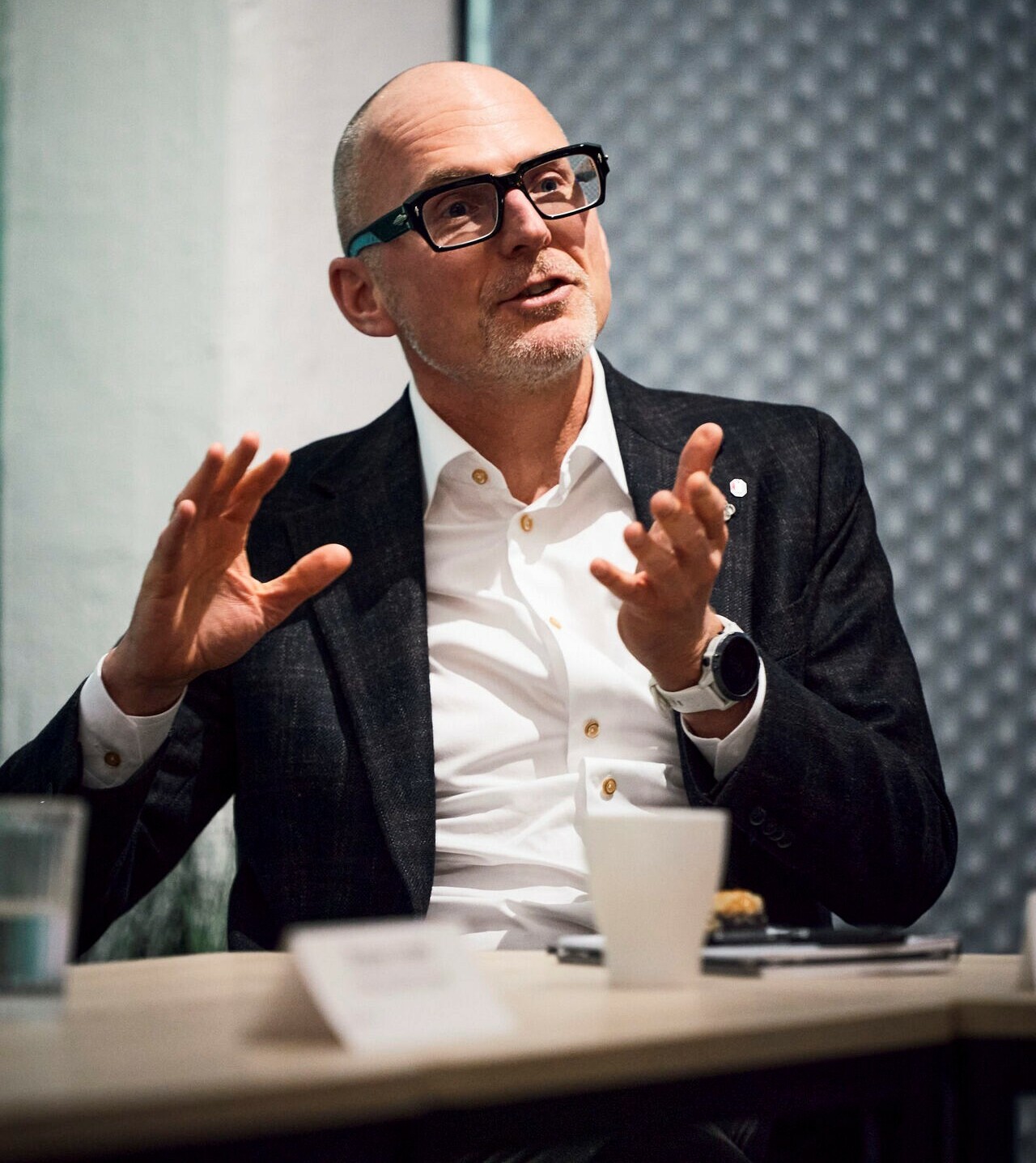
Photo credit: 609 Studios